Research
Threat, Diversity and Urbanity in Johannesburg
PhD project
Part of the research project Threat and Diversity in an Urban Context. Ethnically Heterogeneous and Unequal Urban Neighborhoods in the Global South, SFB 923 Threatened Orders , University Tübingen.
- PI: Prof. Dr. Boris Nieswand (University Tübingen)
- Project staff: Dr. Damián Martínez (University Tübingen), Manuel Dieterich (University Tübingen)
- Project duration: 2019-2023
The main focus of my PhD research is on how everyday threat diagnoses affect the relationships between diverse and unequal population groups in ethnically and socially heterogeneous neighborhoods. A key finding so far is that different threats operate according to a logic of their own (Eigenlogik), each of which affects the local configuration of diversity and contributes to its re-configuration in specific ways. The boundary drawing processes thus run along different social difference categorizations depending on the threat. The social boundary-drawing processes are strongly managed via moral evaluations, whereby one’s own group is designated as ‘good’ or ‘right’ and the others as ‘bad’ or ‘problematic’. This is due to the fact that threats, because of their existential quality, have a tendency to polarize and moralize. For inter-group relations, this means that both their mutability and their constancy become visible in and through threats and the accompanying moralizations. The different emerging threat figurations thus enable the representation and tracing of social change on the level of neighborhoods.
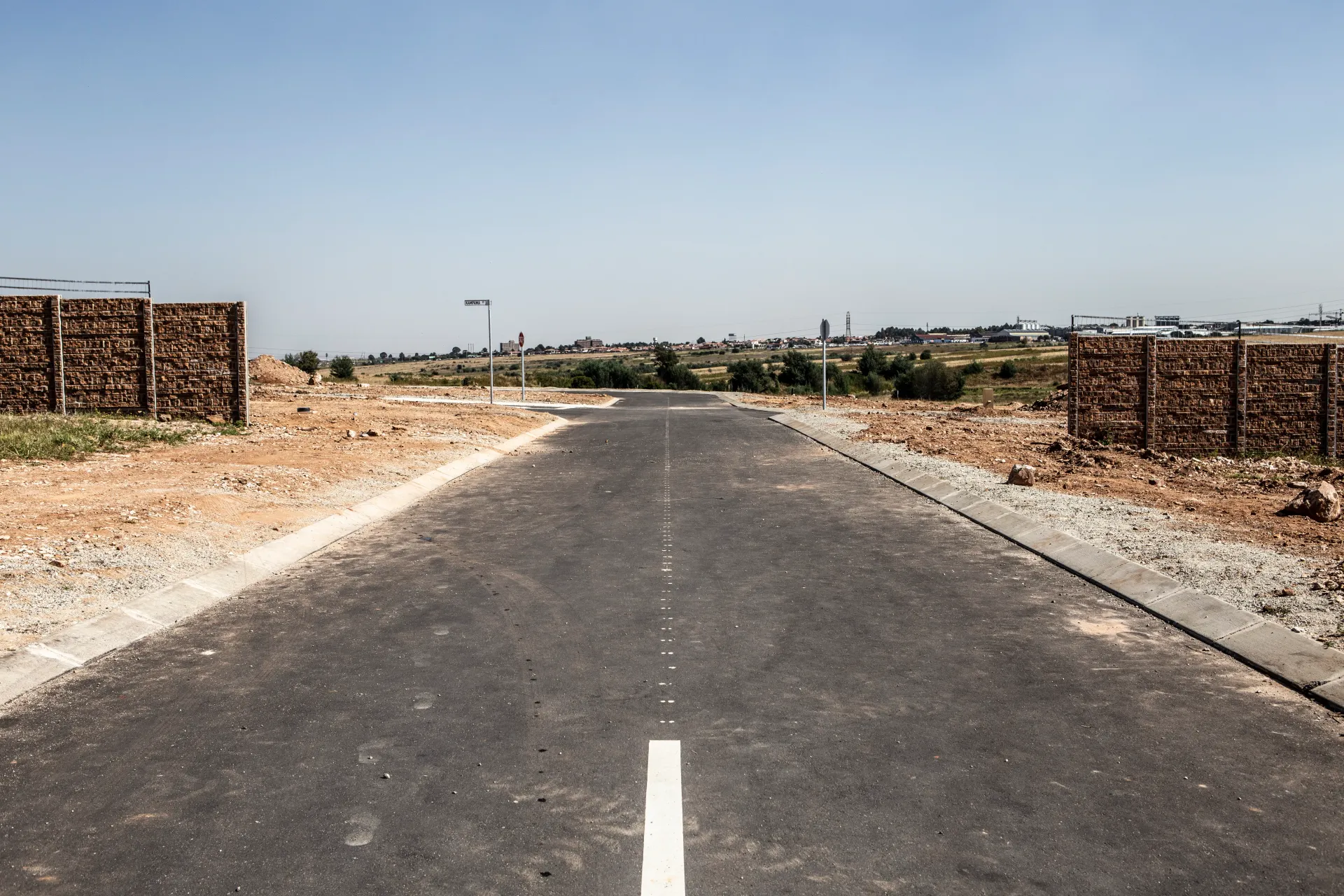
The neighborhood constellation in Johannesburg is located in the outlying district of Krugersdorp in the west of the city. Mindalore, the more affluent neighborhood, largely inhabited by people who can be categorized as lower middle class, stands in contrast to Soul City, an informal slum-like neighborhood. They are separated and connected by a barren wasteland where the so-called ’zama zama’ illegally mine for gold. The local threat communication emerges around very different topoi like crime, the illegal miners and the syndicates, the fear of White Afrikaner of losing their identity, the health hazards through environmental pollution due to gold mining or corruption and its consequences. To answer the research question about the effects of threat communications on the urban diversity configuration, I investigate the various threat communications and how they re-configure the local inter-group relations.