Blog (7)

Aktuelles von mir

Call for Paper: Between Emotion and Reason

Exploring the Operational Logic of Morality

Internationale Konferenz 11.-13. Mai 2023, Universität Tübingen

People’s relation to the world changes when they consider something under the auspices of morality. In order to explore this process we understand moralisation as practice, a modulative intervention that triggers those changes of relationship to the world. When using the term moralisation, we draw on recent neopragmatist and praxeological approaches to the sociology of morality, which emphasize the quotidian practical relevance of references to morality. These perspectives allow to ask what happens when “something” is treated as a question of morality. Moralizations rely on implicit or explicit references to rational properties of everyday reasoning that make it appear plausible to wonder why a certain value or a common good (fairness, prosperity, integrity, solidarity, reciprocity etc.) becomes relevant in a specific situation. Focusing on the pragmatics of moralization, we can ask how and when actors refer to moral justifications, values and forms of moral reasoning and which effects they have on social situations. However, moralizations are shaped not only by their rational properties or the ways in which they are rationalized, but also by the emotions they evoke and the rules of feeling associated with them. Solidarity, care, honour, guilt, anger, disgust, fear, envy, or shame are emotions mobilized by moral frames and scripts that interact with the rational properties of moral reasoning.

To give an example, refugee reception might be seen and discussed by some actors within the moral frame of humanitarianism, with its moral imperative to alleviate human suffering, by others in the framework of integrationism, with its moral imperative to facilitate inclusion in the institutions of the nation-state, and by some in the framework of anti-Islamism, with its moral imperative to exclude Muslim immigrants and prevent them from entering a country. The different situational framings are not only coupled to distinct rationales, but also to differing forms of emotion management: With whom do we feel empathy or disgust? Whom do we have to fear? With whom are we in solidarity? Whom do we blame for our problems? Against whom we feel resentment? Who do we feel responsible for? etc.

Within the framework outlined above, the aim of this conference is to invite colleagues to discuss issues that arise around the operational logic of moralization, with particular attention to the interaction of emotionalizations and rationalizations.

Some of the questions we would like to address with the conference are:

  • How is the relationship of rationalizations and emotionalizations played out in practice?
  • How do moral interventions modify social dynamics?
  • What kinds of dynamics do they trigger?
  • What moral emotions are evoked and how do they affect social dynamics and group formation?
  • What role do scripts of confrontation or scripts of inclusion play in the context of moralization processes?
  • Can we identify groups or types of moral entrepreneurs working for the moralization of social situations or discourses?
  • What are the broader structures of local, national and transnational moral economies that help us better understand recent processes of social change and polarization?

Our own reflection on morality is rooted in urban studies and migration studies, and we welcome contributions from this field of study as well as from other areas of social science research.

The conference will take place May 11-13 at the University of Tübingen. Travel costs will be covered by the CRC 923 ‘Threatened Orders’.

Please send abstracts of 200-300 words until the 10.01.2023 to: morality.conference.tuebingen@gmail.com
Christel Hopf-Preis 2023

I was absolutely delighted when I learnt that my essay 'Urban Threat Figurations' had been awarded the Christel Hopf Prize 2023! This prize is awarded annually by the Section of Qualitative Social Research of the German Sociological Association (DGS) (more information here). This award is a special recognition and honor for me and my work and I would like to thank the jury very much!

Click here for the open access article: Urban Threat Figurations

LoKoNet Travelling Conference

Dortmund 26. & 27. Februar 2024

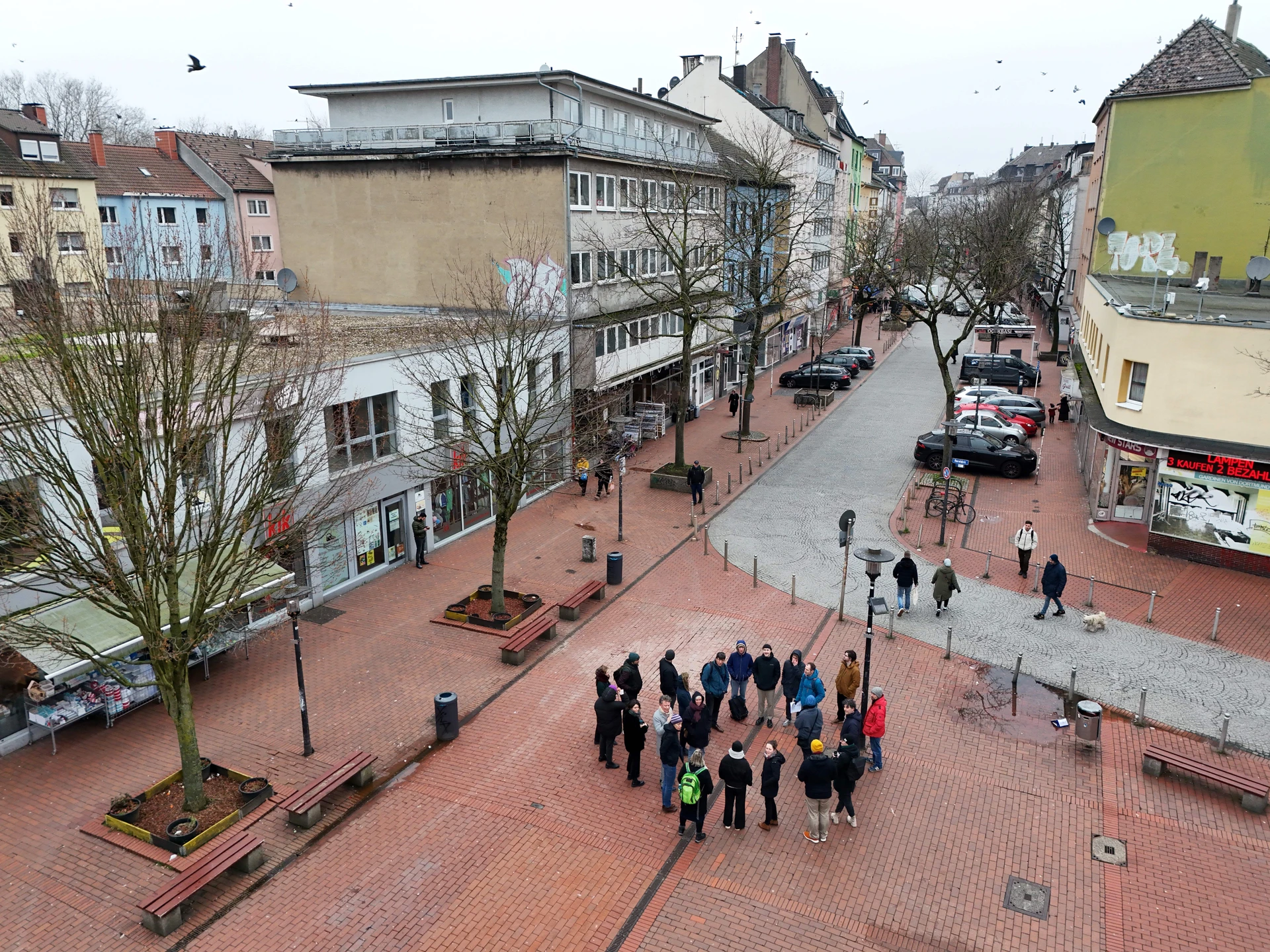
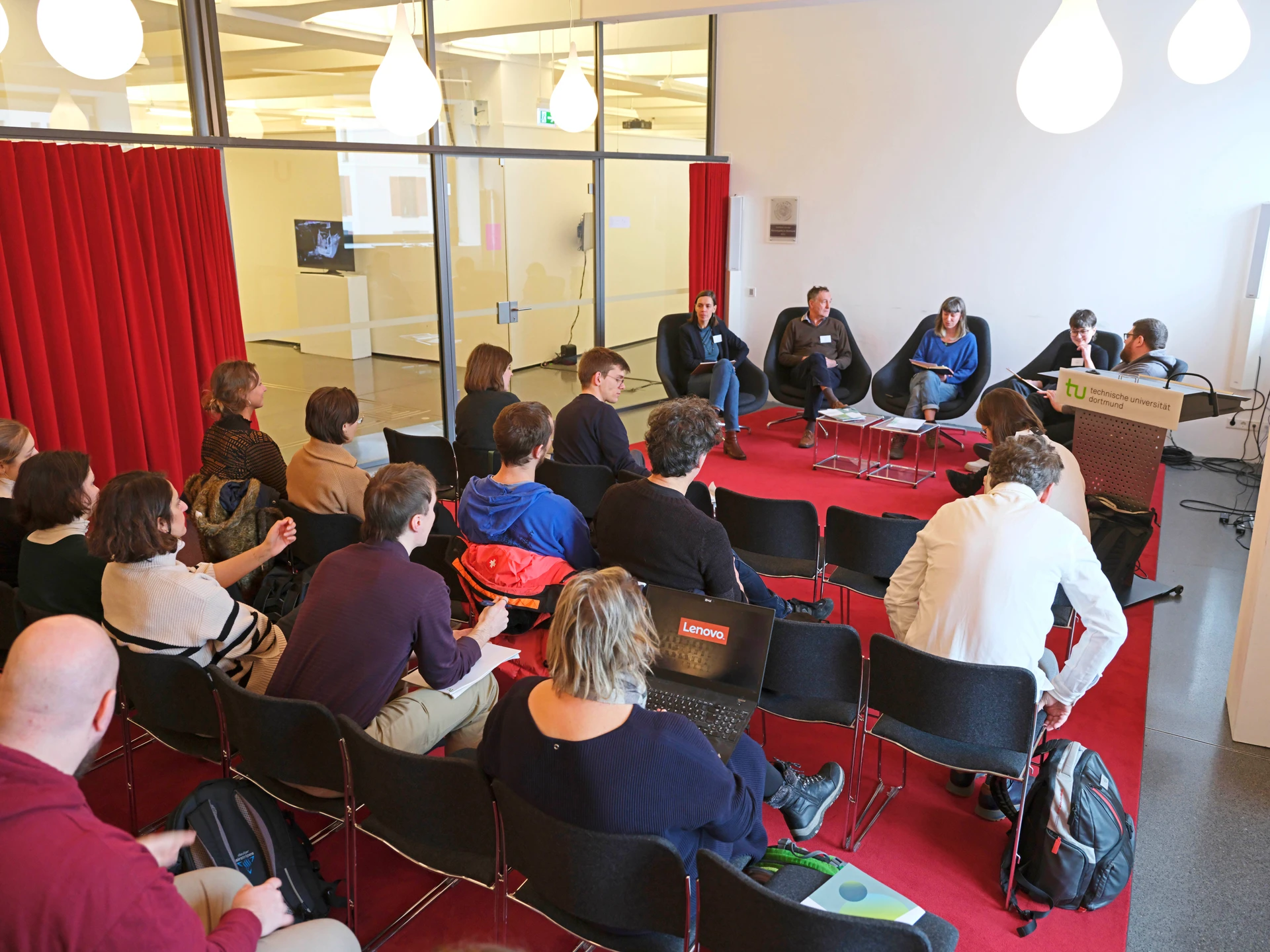
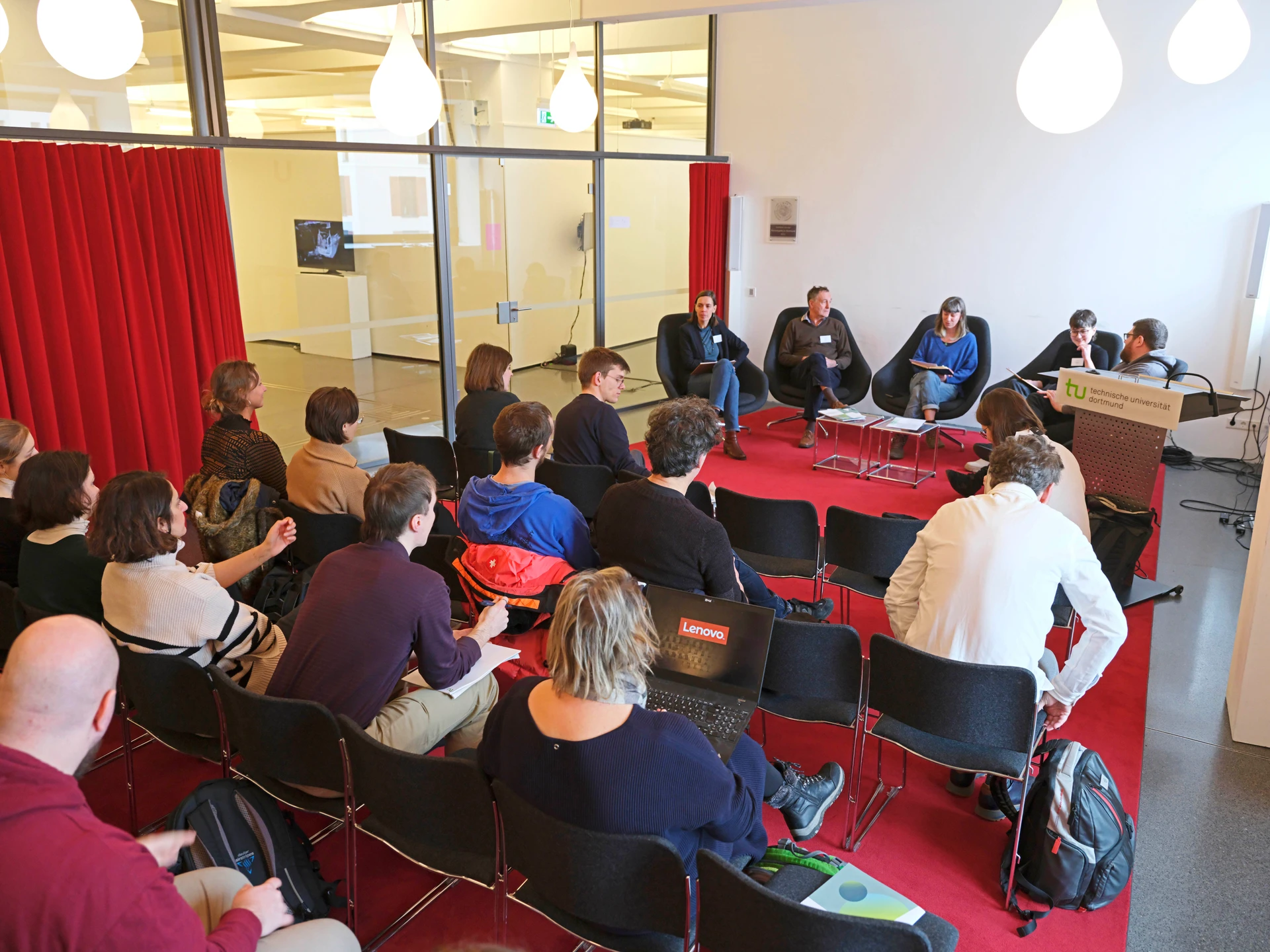
The LoKoNet Travelling Conference in Dortmund was a very exciting encounter between various academics and practitioners who exchanged views on the interactions between urban planning and local conflicts. In addition to various interesting presentations and entertaining panel discussions, one highlight was the excursion to the Nordstadt district, where Dennis Zilske from Planerladen informed us about neighbourhood-related conflicts and dialogue processes. All in all, it was a wonderful and stimulating atmosphere with nice people and interesting scientific and social topics.


This post is also available in German.

Kriminelle, Junkies und andere Bösewichte

Sicherheitswissen und moralische Grenzziehungen in Johannesburg, Murcia und Santiago de Chile

The chapter, co-authored with Boris Nieswand and Damian Martinez, examines how different moral bodies of knowledge emerge around the topic of crime in Johannesburg, Murcia and Santiago de Chile, which guide local border and boundary-making practices. Despite local particularities, an astonishing degree of similar mechanisms emerges. In all three cities, people who are perceived as poor are also portrayed as potential criminals.

The article was published in: Frie, Ewald / Meier, Mischa / Dürr, Renate / Franke, Astrid / Patzold, Steffen / Nieswand, Boris / Rhiem, Max (Hrsg.) Krisen anders Denken. Wie Menschen mit Bedrohungen umgegangen sind und was wir daraus lernen können. (mit Damián Omar Martínez und Boris Nieswand) Berlin: Propyläen, S. 210-224.


This post is also available in German.

Panel: Urban Moral Economies and the Sociology of Polarization in Global Perspective

Panel at the 41. DGS conference 'Polarisierte Welten'

At the 41st Congress of the German Sociological Association (DGS) “Polarisierte Welten” from 26.-30.09.2022 at Bielefeld University, I will organize the panel ‘Urban Moral Economies and the Sociology of Polarization in Global Perspective’ together with my two colleagues Boris Nieswand and Damián Martinez. We have received exciting abstracts and have selected a total of four papers to be presented and discussed at the panel. I will post more news as soon as it is finalized.

For more info on the DGS Congress.


This post is also available in German.

Book Release: Stadt – Migration – Moral

Analysen zur lokalen Moralisierung der Migration

I am very pleased to announce the release of this anthology, which I am co-editing with Jan Lange. It contains many interesting contributions, for example about the possible pitfalls of migration-related participation formats, the construction of ‘migrants in the neighborhood’, governmental practices in dialogue forums, moral contestations in participatory urban development projects, moral assertion strategies in local migration regimes, the image of the welcoming city, urban citizenship as a moral construct, and dilemmas of urban ethnographic ethics research today.

The anthology is concerned with the moralization of migration at the urban level and focuses on state administrative action, the operation of civil society initiatives, and their interplay within urban governance.

TVV-Verlag


This post is also available in German.

Lecture Series: Urbanity in Global Perspective

In July the series of lectures starts that I and my two colleagues Damián Martinez and Boris Nieswand are organizing. The global contributions will offer different perspectives on urban phenomena. For this purpose, we have planned six exciting and very diverse lectures:

  1. Urban Abandonment and Civic Belonging. Perspectives from Johannesburg and Murcia
  2. Marseille: Networks of Urbanity of a ‘Southern’ City
  3. The Latin American Paradigm of Urban Studies and the Production of Knowledge about the Global South
  4. Relocating Exploitation: Tenant Shopkeepers’ Livelihood Struggles in the Speculative City of Seoul
  5. The Production of Urban Space in Gauteng
  6. Africa-India Migrations and City-Making in Delhi

All events will be held in hybrid format as long as permitted by Corona regulations. Zoom Link